
When plain is not boring

plain-jane by Jason Silkey
In How to Look at a Painting, Justin Paton writes plain English that’s lively and original and fresh and surprising. And no, that is not a contradiction in terms.

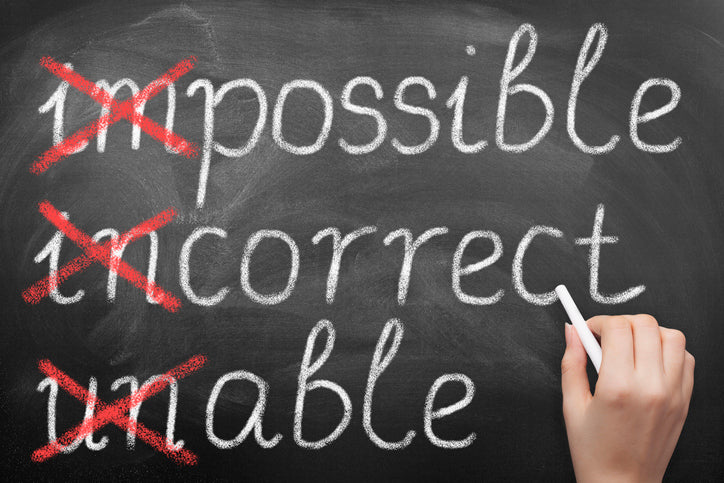
Plain English (or plain language) has at least two meanings. It means clear, as in plain as the nose on your face. And it means simple and straightforward, not frilly or fancy. But it has never meant ugly or boring or constrained.

There’s another animal called Basic English, invented in 1930 by Charles Ogden in a misguided attempt to make English a universal language. Ogden simplified the grammar rules of English and created a core list of 850 words. Any document should have a maximum of 1000 words, allowing for 150 specialised words. Now that’s boring. Basic English is boring English, by definition. Worse, it doesn’t make things easier for those learning English as a second language, because the basic words have many meanings. Try looking up the word get in a decent-sized dictionary. Then look up obtain. A longer word is often simpler, because it has fewer meanings.

Recently Professor Holmes wrote about the dangers of restricting vocabulary and banning words. I couldn’t agree more, and yet it’s not uncommon for people to assume plain English is about banning complicated or specialist language. In fact,

a plain English document is one that the intended reader can easily read, understand and use.

Key words: intended reader. Doctors, linguists, accountants, plumbers and cricketers all use in-words specific to their area of expertise. No problem.

Here’s Justin Paton on the subject:

But let’s be clear and draw a line between jargon and terminology. If an art writer keeps slinging mushy verbs such as ‘problematise’ at you, you have a right — and perhaps a duty — to start slinging something back. Such words aren’t there to illuminate an experience or bring you nearer an object. They’re intended to lend a glint of wished-for rigour to the prose, and to flash friendship signals at other problematisers. That’s jargon. If, on the other hand, you quiver with indignation at the words ‘impasto’ and ‘assemblage’, I hope you don’t mind my saying but you need to get out more. Complaining about such words is like complaining about ‘carburettor’ or ‘chardonnay’. They’re simply terminology.

Go Justin!

Plain Jane image: JustinSilkey.com

How to look at a something

How to look at a painting by Justin Paton
How to look at a painting by Justin Paton has just been republished in hardback. Which is a supreme compliment to an author: graduating to hardback means The People (or Awa Press, the publisher) believe this book is a keeper. One to reread and lend and jealously reclaim.

They’re right, it’s a little beaut. The 2006 Montana Book Award for Contemporary Culture and three pages of accolades from 22 reviewers underline this fact.

I love the way Paton does actually give lots of tips about how to look at a painting. This isn’t just another art critique in disguise.

How to look at a painting? If I thought I could get away with it, I would have answered that question with one word: slowly.

That’s a great start. People shuffle past famous paintings in solemn queues, gallop around galleries in pursuit of a personal best, adopt instant karate poses to defend themselves against art, attend gallery openings for the wine and gossip, or are blind to the painting right under their nose. So slowly is salutary advice.

Paton describes a fully kinetic and human involvement with paintings. He walks the length of a big one, squints at some up close, dives in, gets looked at by them, and spends quality time with them. And he gives us permission — no, he instructs us — to notice the obvious: respect the thing. For example, a whopping wooden board sends a different message from a flimsy piece of paper. If the frame dominates, that’s a big deal too.

Paton bubbles over with enthusiasm. This is fun! Which is not the run of the mill attitude to art. Many are frightened of art, think of it as an enemy to be overcome. They think an opinion is required, and their opinion is worth nothing, and they’ll look like an idiot. So this might be Paton’s most liberating tip:

When looking at a painting, before answering the question ‘What do I think’ try ‘What did I notice?’ No opinions without observations.

Hm. Cool. We can all do that.

So, how to look at a web page? Most of the time, quickly. Very quickly. Do it like you do already, hunting for the information you need. If you find what you need almost immediately, the look and feel don’t interfere with your search, that’s a good web page.

That would be a very short book. Appropriate, don’t you think?

P.S. Exceptions, exceptions. They are myriad. I mean web sites that you do want to look at slowly. Waste all day on them. They’re about art: no coincidence.
Over the net and on the table
Local: Amsterdam Souvenirs
Postcard from Puniho
The Doing wire netting chair

Fun with… visual linguistics

Quote from Neil Cohn visual linguistics.

Mere words can’t do justice to Neil Cohn’s web site about the theory of visual linguistics. Does visual linguistics sound boring? Not when a graphic artist/academic applies everything he knows about visual language to his own web site.

One glance at the site and I was hooked. That’s the way it should be. What a way to use blog technology! The relevance to web content is resounding. I mean strobing. Or, well, obvious.

Neil Cohn - Emaki.net

Intranet innovations 2008

Intranet Innovation Awards.
James Robertson knows intranets as nobody else does. He and StepTwo Designs are behind the brilliant annual awards for Intranet Innovation Awards. Note the difference: this is not about naming the best intranets in every sense, but about acknowledging innovative projects, large or small, with a big impact on the intranet’s functionality, communication and collaboration, frontline delivery or business solutions.

Intranet management teams are generally isolated, and may depend on developers to show the big picture. The goals of the awards are:

  1. to celebrate the great work done by intranet teams across the globe, to give them the recognition they deserve
  2. to find [new] ideas, whether large or small
  3. to share them with the wider community.

Winners and commended entries came from Canada, Switzerland, Australia, USA, UK and Germany.

With typical generosity, StepTwo Designs provides a 30-page executive summary of the whole report, packed with facts and screenshots. It’s exciting and it’s free. But if you are seriously involved in intranet development, you won’t begrudge the US$189.00 for the full report.

Intranet Innovations 2008

Just by the way, the summary starts with a crystal clear IP statement in plain English.

Spacing helps readers more than big fonts

Tons of space: kite surfing in Tokelau.

New York researchers have found a key factor in whether we recognise objects.

It’s not their size but their distance from other objects.

Because objects include letters, designers of font, books and documents will have a field day with this information.

Old truths will hold firm, however. This was always true and always will be:

If you can’t squeeze text into the allotted space, cut the text, not the space.

A snake in the plagiarist’s Eden

Turnitin: plagiarism prevention
No doubt about it, the Web is paradise for plagiarists. Term paper on Virginia Woolf? Speech about Nelson Mandela? Article on choosing a handbag? Search, click, cut and paste and you’re done. Some sites even brazenly sell ghost-written papers and templates, often with a token warning about plagiarism.

Even with help from Google, teachers and lecturers can’t catch all the offences, let alone prove them. So Colin Sutherland of Waikato Institute of Technology trains academic staff to use a tool that spots similarities in documents. According to Turnitin, 29% of students use significant plagiarism, and 1% copy entire papers.

Turnitin Plagiarism Prevention instantly identifies papers containing unoriginal material. The reports are extremely easy to read, using smart design and bright colours to make the identical phrases, sentences and paragraphs stand out.

No plagiarist, Colin Sutherland asked my permission to use a chapter from my book Web Word Wizardry to demonstrate Turnitin to lecturers. He’s welcome! Sure enough, 30% of an article on click2site.com is identical to that chapter, with no acknowledgement.

Turnitin say that their

plagiarism prevention is often so successful that institutions using our system on a large scale see measurable rates of plagiarism drop to almost zero.

As for plagiarism on the Web, chasing powerful offenders into the law courts is not an everyday activity for Alice and me. We can sue but hope we won’t have to. Meantime I said to Colin (I said, I said):

I suppose I should be horrified or at least surprised to see my work circulating without acknowledgement. But I’m used to it… even in government communications. People quote my own words back as a given. Someone intending to use my work for one of our largest companies defended himself last week by saying that what I teach is standard knowledge. That’d be right, too! You write, it goes out into the world, people say Yes, yes! and think they always knew it. It gets recycled and becomes standard knowledge. What’s a girl to do? Writing more, new, better courses and books is my only defence.

Waikato Institute of Technology

Happy birthday to us

Happy birthday to CONTENTED

Contented Enterprises is one year old. Actual birthday is 13 September but Alice and I celebrated today by giving each other an armful of flowers and a birthday cake.

We intend to be Contented for many years to come. But we’re delighted with our progress so far. A national award, happy customers, and glory be, we have got enough cash in kitty to start on redevelopment! That’s pretty cool for a toddler. And the reason is that CONTENTED courses are meeting a need for convenient, user-friendly, inexpensive courses for large groups of content authors.

As an extra birthday treat we gave 4 lucky winners of the New Zealand Plain English Awards a surprise gift:

  1. Three people from the Ministry of Education received CONTENTED courses for the Team Up campaign, which won the 2008 Plain English Champion: best project.
  2. Deborah Morris is this year’s Plain English Champion: best individual. Besides getting a splendid trophy, she will do the CONTENTED courses free.

United States Embassy web site: thumbs down

Can of worms
The Plain English Awards ceremony 2008 last Thursday celebrated heroes of plain English in New Zealand. Four categories are for web sites, and web content is a big factor in other categories too.

The United States Embassy in Wellington was a clear winner of the Brainstrain award for the worst web site: People’s Choice. For this category, members of the public nominate the worst web sites, and the judges pick a winner.

With all finalists in the Brainstrain web site award, the nominator was enraged by a single factor - so enraged that they entered the site for this dreaded award. In fact, the other two finalists were good web sites apart from one frustrating problem. That’s a sobering thought, isn’t it?

On the Embassy site the offending page was about fiancé(e) visas. Here’s an example of its impenetrable prose:

To apply for K-1 visa classification for an intended alien spouse, an American citizen must file a petition, Form I-129F, with the USCIS Regional Service Center having jurisdiction over the place of the petitioner’s residence in the United States. Such petitions can not be adjudicated abroad.

But the entire Embassy web site is a worthy winner, being absolutely riddled with problems. Take a look at the site and this is what you’ll see.

  1. Ugliness.
  2. Links to news pages on the same site open in new window: annoying and unconventional.
  3. Ambassador bio starts with 168-word paragraph: overwhelming and unread on a web site.
  4. Underlining of non-link phrases.
  5. Breadcrumbs don’t always match the page: many apparent home pages.
  6. Making Of U.S. Foreign Policy page consists of Introduction, circuitous structure, no other subheadlines.
  7. “The content has moved. It can now be found here.”
  8. Justified text.
  9. Long pages with no subheadings.
  10. Inconsistent design and navigation.
  11. Menu items that would open but not close.
  12. Too-small font making links almost invisible.

I mustn’t waste my whole day here. But here’s another small example of incompetent, hostile, negative web content. Believe it or not, the final word in the following quote, “this”, is a link.

Failure to turn in your I-94 (or I-94W) when you leave the U.S. could create serious problems for you when traveling to the U.S. in the future. For information on how to rectify this, please read this.

The amateurish design and writing on the US Embassy site gives a strong impression that they couldn’t care less about their readers. This is the non-verbal message I get: We’re frightfully big and important. You aren’t. So why don’t you Kiwis just go away and stop bothering us?

By the way, the official judges’ comments are much more polite than my intemperate ranting, which is strictly personal. We just stated that confusing government-speak gave its website an unfriendly and impersonal tone.

The Brainstrain prize is a rubbish bin full of sour worms. The judges are not competing for the honour of delivering these to the Embassy. However, in the best scenario, the winners say, Fair cop. We will fix this problem and do better in future.

Now, on a brighter note…

New Zealand Trade and Enterprise (NZTE) won the premier award of $10,000 for outstanding progress in creating a plain English culture within the organisation. That’s no mean feat with 1000 employees scattered around the world. As WriteMark leader Lynda Harris said, “We deliberately make this award extremely hard to win.”

See all winners and finalists on the WriteMark web site.

Prime News: First at 5.30: only on Sunday 14 September see the Plain English Awards video coverage. Starts around 6.26 mins.

Updating accessibility standards for the blind

Webstock 2009 logo
The lineup of speakers for Webstock 2009 was announced last Tuesday night. Impressive and fun: check it out on Webstock’s gorgeous new web site!

As part of this week’s mini-Webstock, Jonathan Mosen updated us on the basics of web content that blind people can access easily. His demo of navigating content without the benefit of sight was riveting. Web Accessibility - Political Correctness, or Smart Design? was his theme.

W3C accessibility guidelines can be daunting, according to Jonathan. Some are out of date, and they’re not all equally important. If you want to know whether a web site is accessible, nothing beats observing a real blind person as they test it. You cannot replicate that expertise just by using a screen reader. So pay them for their expertise, he says.

Jonathan’s favourite web sites include these three, which are extremely easy to use without vision:

Other snippets from Jonathan:

  • Top 3 fixes are alt tags for images, proper coding of headings, and proper use of tables
  • PDFs can be accessible (turn on the accessibility flag) but processing a PDF is very slow with screen readers
  • Flash can be accessible

Jonathan Mosen’s current activities

The cockroach of language styles

Dead cockroaches from robbaker.org.
Why does gobbedygook live on and on, generation after generation?

It refuses to die a natural death. Bureaucratic style persists even though the benefits of plain English have been proven again and again. (Plain English saves money and time — what more do you want?)

Firstly, some government writers resist what they call dumbing down their information. They’d rather seem important than be clear. Assumption: if the reader can’t understand, that’s the reader’s fault.

Secondly, bad style revolves in a vicious circle. Regardless of any style guide, government employees naturally imitate documents that are wordy, obscure, and riddled with jargon and clichés.

Thirdly, when only a few staff are trained in plain English, it doesn’t take. Untrained colleagues can undo all the good work. Commitment from the CEO is essential.

And that’s why we need legislation making plain English mandatory for government communications. Killing the cockroach requires more than a quick stamp with a big boot.

But you know, it’s not all bad. Many government agencies are making a strenuous effort to communicate more clearly. For example, check the note headed Glossary bottom right on some of the NZ Ministry of Foreign Affairs and Trade web pages— I think they mean it!
See Glossary notice on this MFAT page (bottom right)